Bunny Portrait Embroidery Review
As an experienced embroidery designer who has spent years translating digital concepts into tangible, stitched assets for small businesses, I approach every new machine embroidery design with a critical eye. It is not enough for a design to simply look good on a screen; it must perform under the needle, hold up to wear and washing, and elevate the brand it represents. Today, I am reviewing the Bunny Portrait, a design categorized under Baby Animals within the Embroidery sector. This review focuses strictly on its viability for commercial application, specifically for small business merchandise, branded patches, uniforms, and custom apparel.
First Impressions: Visual Personality and Brand Fit
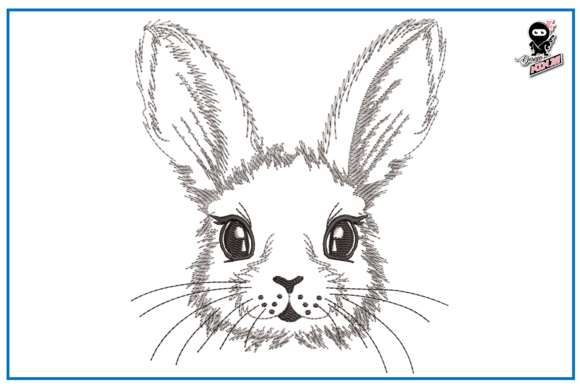
The title "Bunny Portrait" suggests a level of intimacy and character that goes beyond generic clip art. In the world of handmade products and boutique branding, personality is currency. When evaluating this design, my initial assessment leans toward a friendly, playful, yet elegant aesthetic. It feels modern enough for a contemporary lifestyle brand but classic enough for a traditional bakery or florist shop.
For a small café or a creative studio looking to expand their revenue streams, visual consistency is key. The Bunny Portrait appears to have a balanced composition that likely translates well across various mediums. It does not scream "loud," which is often a mistake in professional branding. Instead, it offers a subtle warmth that invites customer engagement. Whether used as a chest logo accent on a work shirt or as a standalone mark on a tote bag, the design possesses the quiet confidence of a premium brand asset. It feels handmade without being messy, striking a delicate balance between artisanal charm and corporate polish.
Real-World Business Applications
Let us move beyond the aesthetics and discuss where this embroidery file can generate actual value for your bottom line. Small business owners are always looking for versatile design assets that can be deployed across multiple product lines without requiring extensive rework.
- Branded Patches: One of the most lucrative applications for a design like this is the creation of embroidered patches. These serve as excellent add-ons for denim jackets, beanies, and backpacks. A small, well-executed bunny portrait can become a collectible item for your customers, encouraging repeat purchases.
- Staff Uniforms and Aprons: For bakeries, florists, or pet brands, staff appearance directly impacts customer trust. Placing the Bunny Portrait on the left chest of an apron or a cap creates a cohesive team identity. It signals professionalism while maintaining approachability.
- Tote Bag Designs: Eco-friendly marketing is huge right now. A simple, high-quality stitch on a canvas tote bag acts as a walking billboard. Because the design is likely compact, it fits perfectly within standard hoop sizes, keeping production costs low while maximizing visibility.
- Caps and Headwear: Cap embroidery requires precision. If the Bunny Portrait has clean lines and adequate negative space, it will sit beautifully on the curved front panel of a baseball cap or a structured bucket hat, common items in craft business inventory.
- Product Packaging Accents: Do not overlook the unboxing experience. Stitching a tiny version of the design onto hang tags or fabric labels adds a tactile element that elevates the perceived value of your finished product.
This versatility makes the Bunny Portrait a strong candidate for Etsy sellers and merch creators who need to churn out diverse SKUs efficiently. It works equally well as a customer gift at holiday events or as a staple item in a seasonal collection.
Strategic Placement and Brand Identity
When you integrate a specific motif like a bunny into your brand identity, you are making a statement about your values. Bunnies often symbolize gentleness, growth, and care. If your business aligns with these traits, the design reinforces your narrative. However, if your brand is industrial or ultra-minimalist, this design might clash. For boutiques selling baby items, organic skincare, or children’s clothing, however, it is a perfect fit. It enhances buyer engagement by creating an emotional connection before the customer even touches the product.
Where to Exercise Caution
Not every design suits every application. As a designer, I must highlight areas where the Bunny Portrait could fail if applied incorrectly. Understanding these limitations prevents costly production errors.
First, consider scale. If you attempt to use this design as a tiny detail on a sleeve cuff or a minuscule patch, fine details may get lost. Embroidery relies on thread thickness; if the design elements are too thin, they will merge together, resulting in a muddy image. Always test the design at its smallest intended size.
Second, evaluate the substrate. Textured fabrics, such as heavy tweed or loose-weave linen, can distort the stitch path. On dark uniforms, ensure the thread colors provide sufficient contrast. A light-colored bunny on a black shirt might lack definition unless a dense underlay is used. Furthermore, items that require frequent industrial washing, such as kitchen aprons, demand robust stitch density. If the design is too sparse, it may pucker or fray over time.
Finally, be wary of curved surfaces like the sides of caps or rounded containers. Without proper digitizing techniques to accommodate curvature, the design may look distorted. This is why testing on real fabric is non-negotiable.
Practical Designer Notes for Production
To ensure the Bunny Portrait delivers a professional result, follow these technical steps before committing to bulk production.
- Black and White Test: Convert the design to monochrome first. This helps you assess the shape and balance without the distraction of color. If it looks good in black and white, it will look great in color.
- Check Stitch Density: High stitch density can cause fabric puckering, especially on lightweight materials. Inspect the spacing between stitches to ensure they are not overcrowded.
- Thread Color Contrast: Select thread colors that pop against your target fabric. Don't rely solely on the digital preview; view the threads in person under natural light.
- Hoop Size Confirmation: Verify that the design fits within your machine’s maximum hoop dimensions. If it is too large, you may need to split the design, which can leave visible seams.
- Stabilizer Selection: Use the appropriate stabilizer for your fabric type. A cut-away stabilizer is usually best for garments that will be worn frequently, while tear-away may suffice for one-time-use items like event banners.
- Create a Printable Mockup: Before stitching, create a realistic mockup for client approval or internal review. This allows you to spot issues with placement and proportion early.
- Commercial Licensing: Most importantly, confirm the commercial licensing terms. Ensure you have the right to sell products made with this digital embroidery file. Using designs without proper rights can lead to legal complications.
In conclusion, the Bunny Portrait shows significant promise for small business owners seeking to add a touch of elegance and playfulness to their merchandise. Its potential spans from branded patches to uniform accents, offering a versatile tool for enhancing your handmade product line. By paying attention to technical details like stitch density and fabric choice, you can transform this simple design into a powerful component of your brand’s visual language. Always remember to check specific file details regarding format and exact specifications before moving to full-scale production.